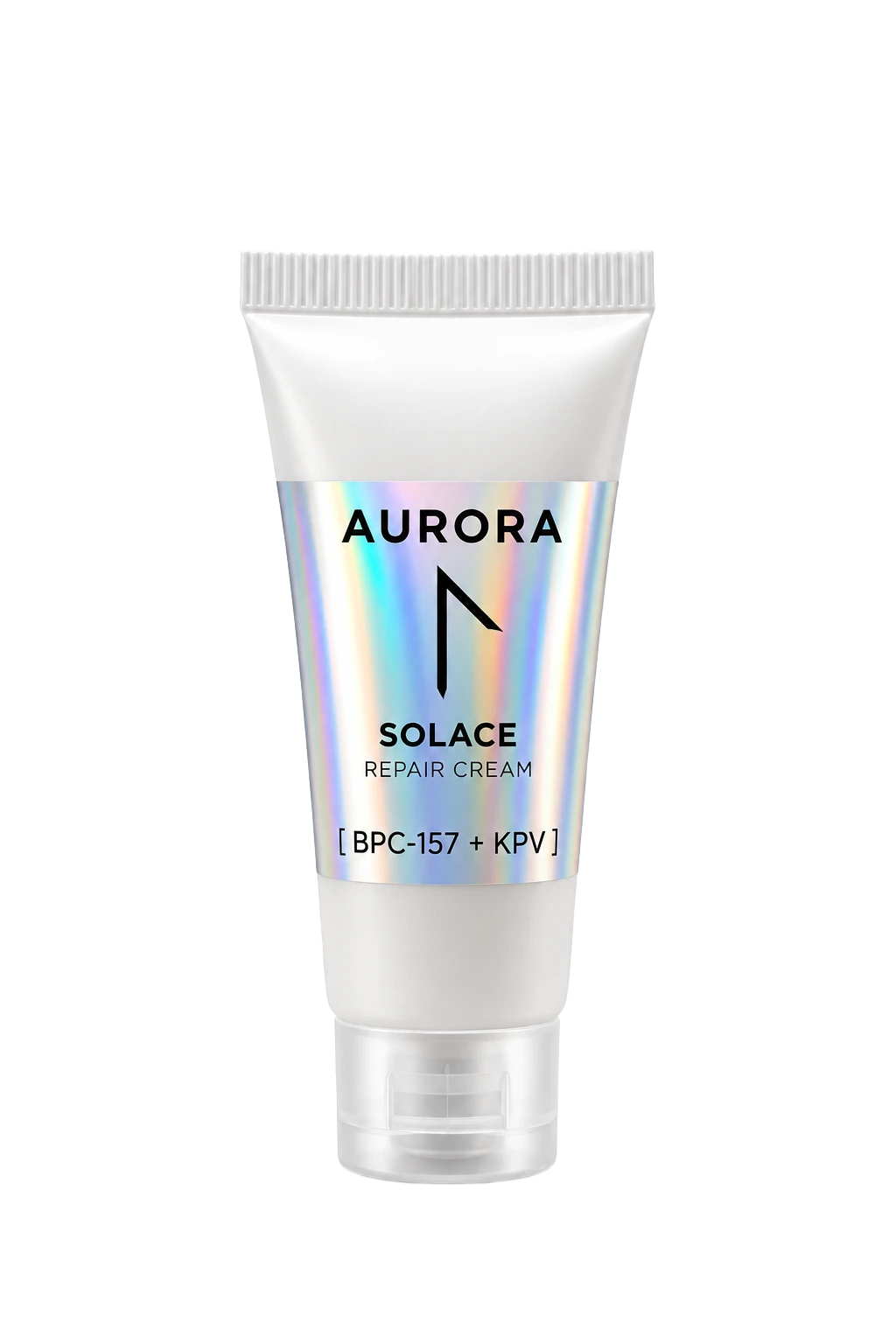
How Solace & Dermal Armor Work: BPC-157 and KPV
The restorative balm twins, explained — BPC-157 to rebuild and KPV to calm, on a barrier-repair base, for compromised, post-procedure and reactive skin.
Solace and Dermal Armor are the same restorative balm under two names — built for skin that's been through something. A compromised barrier, a patch that won't settle, the aftermath of a procedure or a breakout. It pairs two research peptides that do two different jobs: one tells the skin to rebuild, the other tells it to calm down. Here's how it works, honestly.
BPC-157 — the repair signal
BPC-157 is a peptide nicknamed the 'body protection compound'. It's been studied extensively — mostly in animal models — for accelerating tissue repair and, importantly, angiogenesis: the growth of new blood vessels that carry the raw materials healing needs. The honest caveat: that evidence is overwhelmingly preclinical, and topical human data is thin. It's a research peptide, not an approved medicine.
KPV — the calm switch
KPV is a tiny tripeptide, a fragment of the body's own alpha-MSH hormone, and it's a potent anti-inflammatory. It works by quietening the pro-inflammatory signals — cytokines — that drive redness, heat and reactivity. Where BPC-157 is about rebuilding, KPV is about settling the inflammation that keeps skin stuck in a reactive loop.
Why the two together
Repair and calm are a pair. Inflammation is what slows healing and keeps compromised skin angry; left unchecked, it undoes the repair. So KPV quiets the fire while BPC-157 drives the rebuild — one clears the way, the other does the work. That's the logic of putting them in the same balm.
The base it all sits in
Peptides only help if they land on supported skin, so the balm is a barrier-repair cream in its own right: ectoin and panthenol to hold water and steady the barrier, centella and allantoin to soothe, niacinamide to reinforce, and a ceramide-and-olive-glyceride complex to patch the lipid 'mortar' between skin cells. It's aimed at the hard cases — post-procedure skin, scars, and compromised or reactive zones a normal moisturiser can't reach.
How to use it
Massage a pea-sized amount into clean skin over the affected area, up to twice daily. Patch test first, keep it to intact skin, and treat it as what it is — a research-grade repair balm, not a wound treatment or a medicine. For an actual wound, infection or a diagnosed skin condition, see a doctor; nothing here is medical advice.


